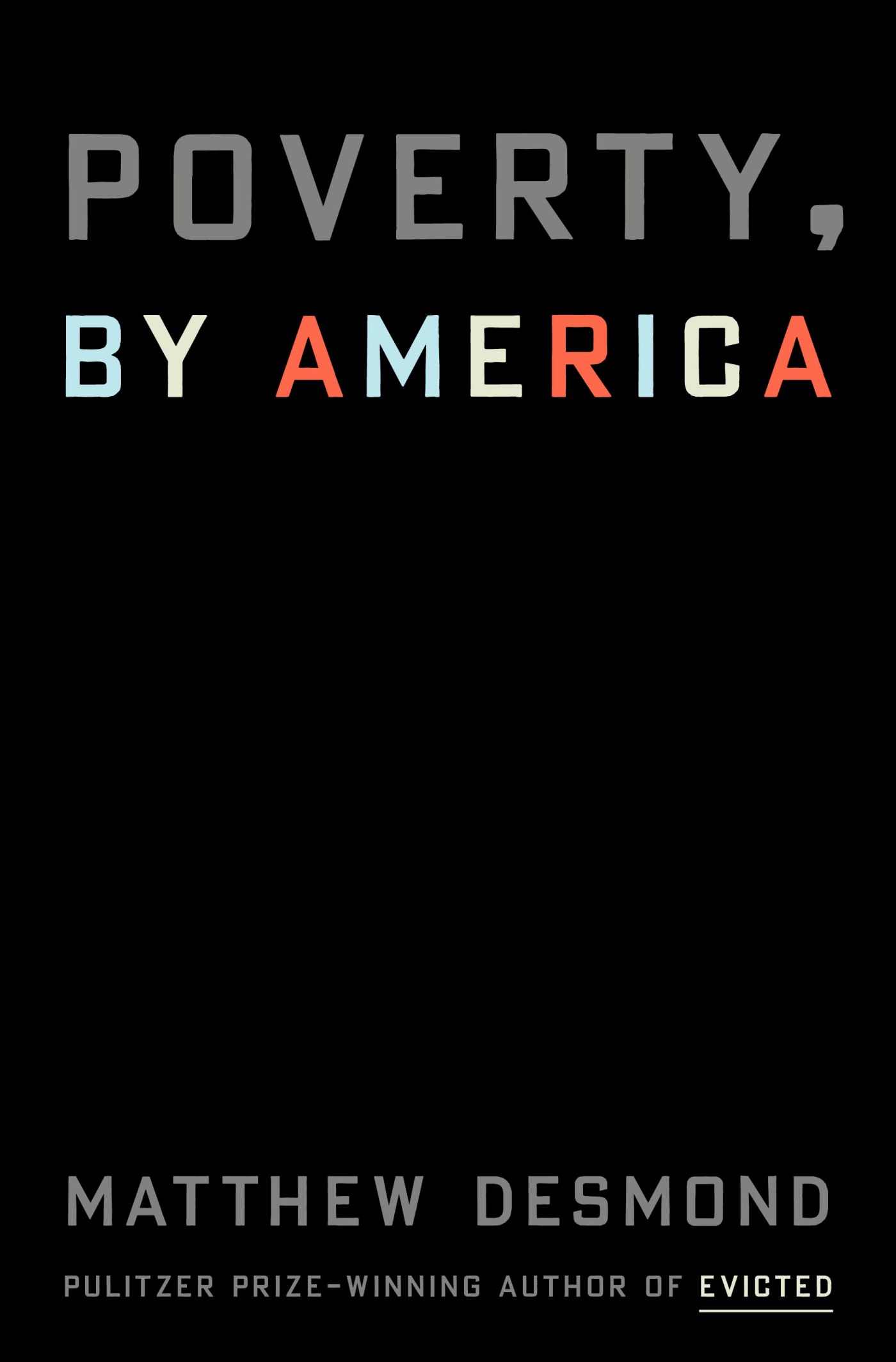
I grew up poor. We weren’t quite in poverty, and we were lucky to have some safety nets, but lack of money was a constant theme. As an adult, I’ve continued to have a particular focus on economic issues, and I’ve been interested in Matthew Desmond‘s lauded 2023 book, Poverty, by America. I’ve finally read it, and indeed, it was as impactful as I’d anticipated.
Why has the United States continued to have such a high rate of poverty over the past 50 years? What can be done to finally lessen—or completely eradicate—poverty in our country? This eye-opening read offers reasons as well as solutions.
What I Liked:
- This whole book is excellent, but certain chapters stood out to me. One was chapter 4, in which the author demonstrates how the poor end up paying more for things than wealthier people. This isn’t news to me, but he offers specific examples and data to illustrate the point. Consider banking and cashflow in particular: Who gets charged overdraft fees? Who gets charged a fee for not having enough money in their account at any given time? What about people who need to take out loans to cover costs: interest rates, especially predatory rates from money lenders, leave people paying far more for the same goods and services simply because they can’t cover the whole bill at once.
- Who gets and uses welfare? In chapter 5, the author describes the various types of welfare available, the prejudices surrounding it, and the lack of awareness for people who need it most. Contrary to claims of welfare queens or the poor using welfare to enable innate laziness, most people who are eligible for welfare aren’t seeking it out or aren’t being approved for it. The author also points out the deep ties to racism in explaining the dysfunction of the welfare system and harmful attitudes towards it.
- “How can we afford it? What a sinful question. What a selfish, dishonest question.” This quote in chapter 7 hit me the hardest. Indeed, it seems the US has endless money for war, tax breaks for the billionaires, and so on. But when it comes to actually helping those who most need it, there’s never enough. If the obscenely wealthy actually cared, they could eliminate poverty. If our country taxed the rich appropriately and put our taxes to better use, we could eradicate poverty. Instead, we funnel our immense wealth into doing more harm and rewarding the worst people.
- Who benefits from keeping people poor? Who is exploiting them? These are the other questions we must answer if we want to solve poverty. Keeping people poor is a policy choice; it is by design. Who’s designing it, and what are they getting out of it? How are we all complicit?
- Get involved! The book ends with inspiring calls to action. We must all get more involved in our social and political spheres if we want to enact change. Vote, volunteer, start a movement or at least join one. Being apathetic will get us nowhere. Being informed and striving for change will allow us to move forward, one step at at time.
Final Thoughts
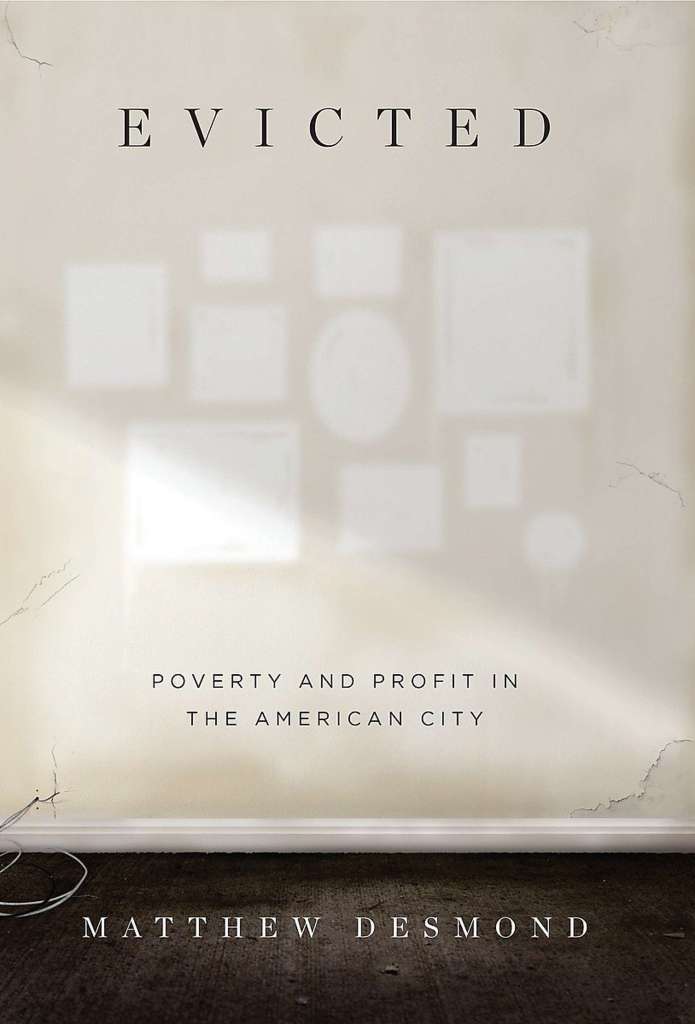
Poverty, by America is a vital account of our nation’s poor, and it should be required reading for all. Books like this can be disheartening; there are so many issues to overcome in this world. But they can also reinvigorate hope—and action—for a better future. Matthew Desmond’s writing is succinct and direct, but also full of genuine care. I’ll read more from him, starting with his award-winning book, Evicted.
Get the Book
You can buy Poverty, by America here – it’s available as a hardcover, paperback, ebook, and audiobook.
| Poverty, by America by Matthew Desmond | |
|---|---|
| Audiobook Narrator | Dion Graham |
| Audience | Adult |
| Genre | Nonfiction: Social Issues |
| Number of Pages | 304 |
| Format I Read | Hardcover |
| Original Publication Date | March 21, 2023 |
| Publisher | Crown |
Official Summary
#1 NEW YORK TIMES BESTSELLER • The Pulitzer Prize–winning author of Evicted reimagines the debate on poverty, making a “provocative and compelling” (NPR) argument about why it persists in America: because the rest of us benefit from it.
A BEST BOOK OF THE YEAR: The New Yorker, The New York Times Book Review, NPR, Oprah Daily, Time, The Star Tribune, Vulture, The Christian Science Monitor, Chicago Public Library, Esquire, California Review of Books, She Reads, Library Journal
“Urgent and accessible . . . Its moral force is a gut punch.”—The New Yorker
Longlisted for the Inc. Non-Obvious Book Award • Longlisted for the Andrew Carnegie Medal
The United States, the richest country on earth, has more poverty than any other advanced democracy. Why? Why does this land of plenty allow one in every eight of its children to go without basic necessities, permit scores of its citizens to live and die on the streets, and authorize its corporations to pay poverty wages?
In this landmark book, acclaimed sociologist Matthew Desmond draws on history, research, and original reporting to show how affluent Americans knowingly and unknowingly keep poor people poor. Those of us who are financially secure exploit the poor, driving down their wages while forcing them to overpay for housing and access to cash and credit. We prioritize the subsidization of our wealth over the alleviation of poverty, designing a welfare state that gives the most to those who need the least. And we stockpile opportunity in exclusive communities, creating zones of concentrated riches alongside those of concentrated despair. Some lives are made small so that others may grow.
Elegantly written and fiercely argued, this compassionate book gives us new ways of thinking about a morally urgent problem. It also helps us imagine solutions. Desmond builds a startlingly original and ambitious case for ending poverty. He calls on us all to become poverty abolitionists, engaged in a politics of collective belonging to usher in a new age of shared prosperity and, at last, true freedom.
About the Author

Credit: Barron Bixler
Matthew Desmond is a professor of sociology at Princeton University. After receiving his Ph.D. in 2010 from the University of Wisconsin at Madison, he joined the Harvard Society of Fellows as a Junior Fellow. He is the author of four books, including Evicted: Poverty and Profit in the American City (2016), which won the Pulitzer Prize, National Book Critics Circle Award, and Carnegie Medal, and PEN / John Kenneth Galbraith Award for Nonfiction. The principal investigator of The Eviction Lab, Desmond’s research focuses on poverty in America, city life, housing insecurity, public policy, racial inequality, and ethnography. He is the recipient of a MacArthur “Genius” Fellowship, the American Bar Association’s Silver Gavel Award, and the William Julius Wilson Early Career Award. A contributing writer for the New York Times Magazine, Desmond was listed in 2016 among the Politico 50, as one of “fifty people across the country who are most influencing the national political debate.”
More Books by Matthew Desmond
More Reviews of Books Like This
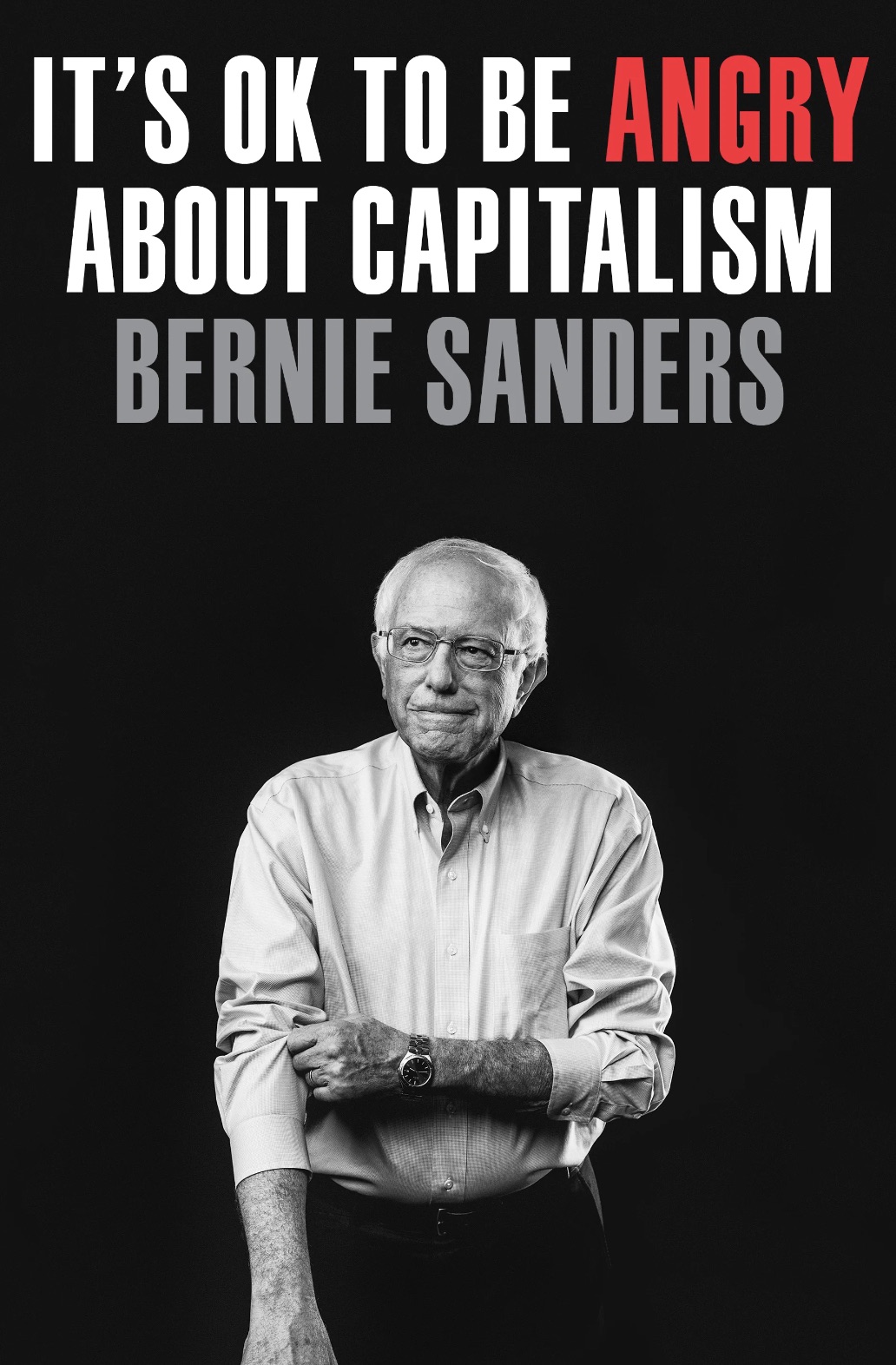
It’s OK to Be Angry About Capitalism
Today is the 10-year anniversary of when Bernie Sanders formally announced his decision to run for president in the 2016 election. An easy date for…
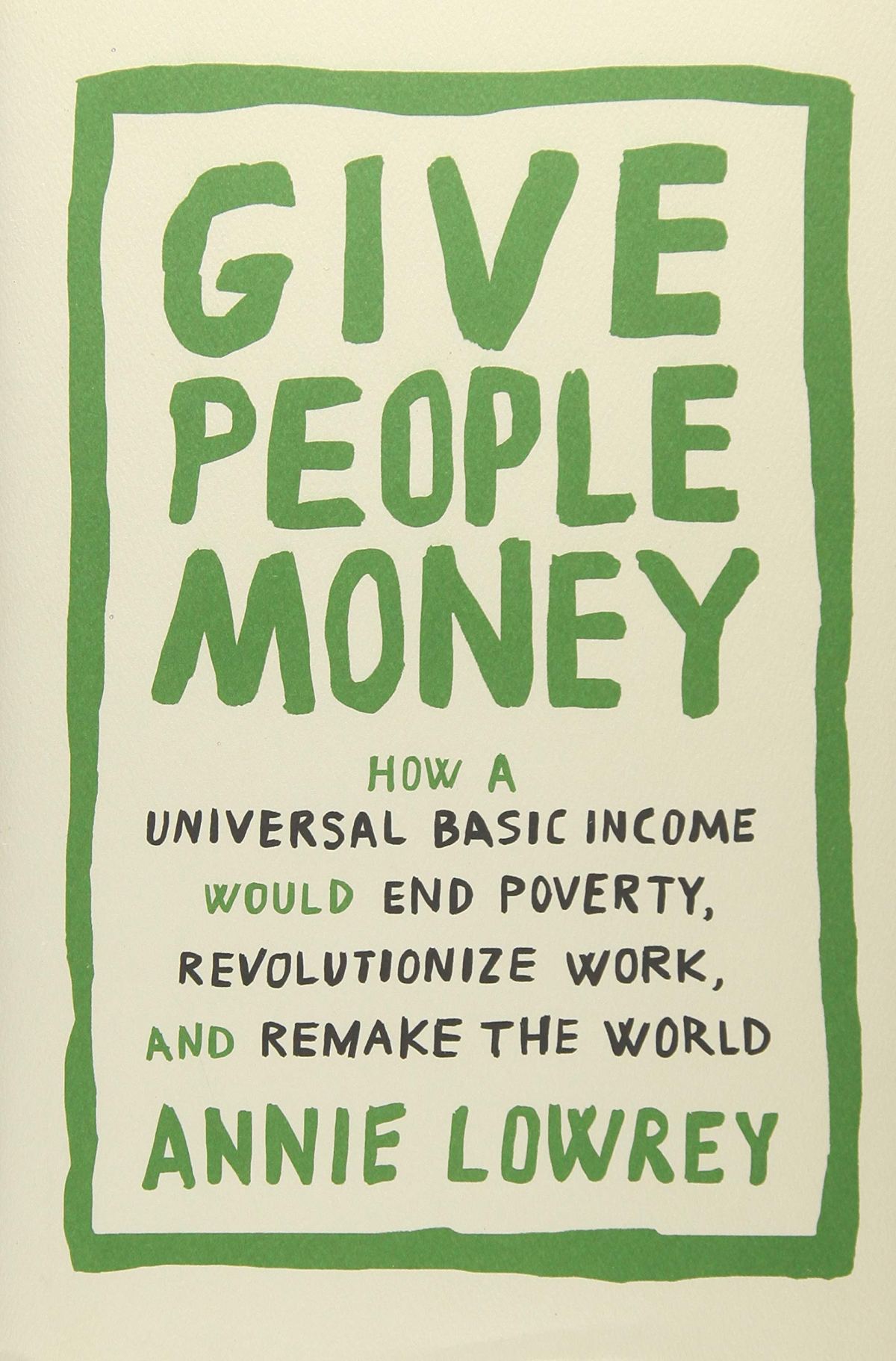
Give People Money
After finishing Rutger Bregman’s Utopia For Realists last week, I wanted to dive deeper into the concept of universal basic income (UBI). So naturally I…
The Purpose of Power: How We Come Together When We Fall Apart
Although the Black Lives Matter movement has been around for nearly a decade, it’s garnered a lot more attention in the past year. I’ve been…
Similar Books on My TBR
Discover more from Amanda's Book Corner
Subscribe to get the latest posts sent to your email.


Footnotes