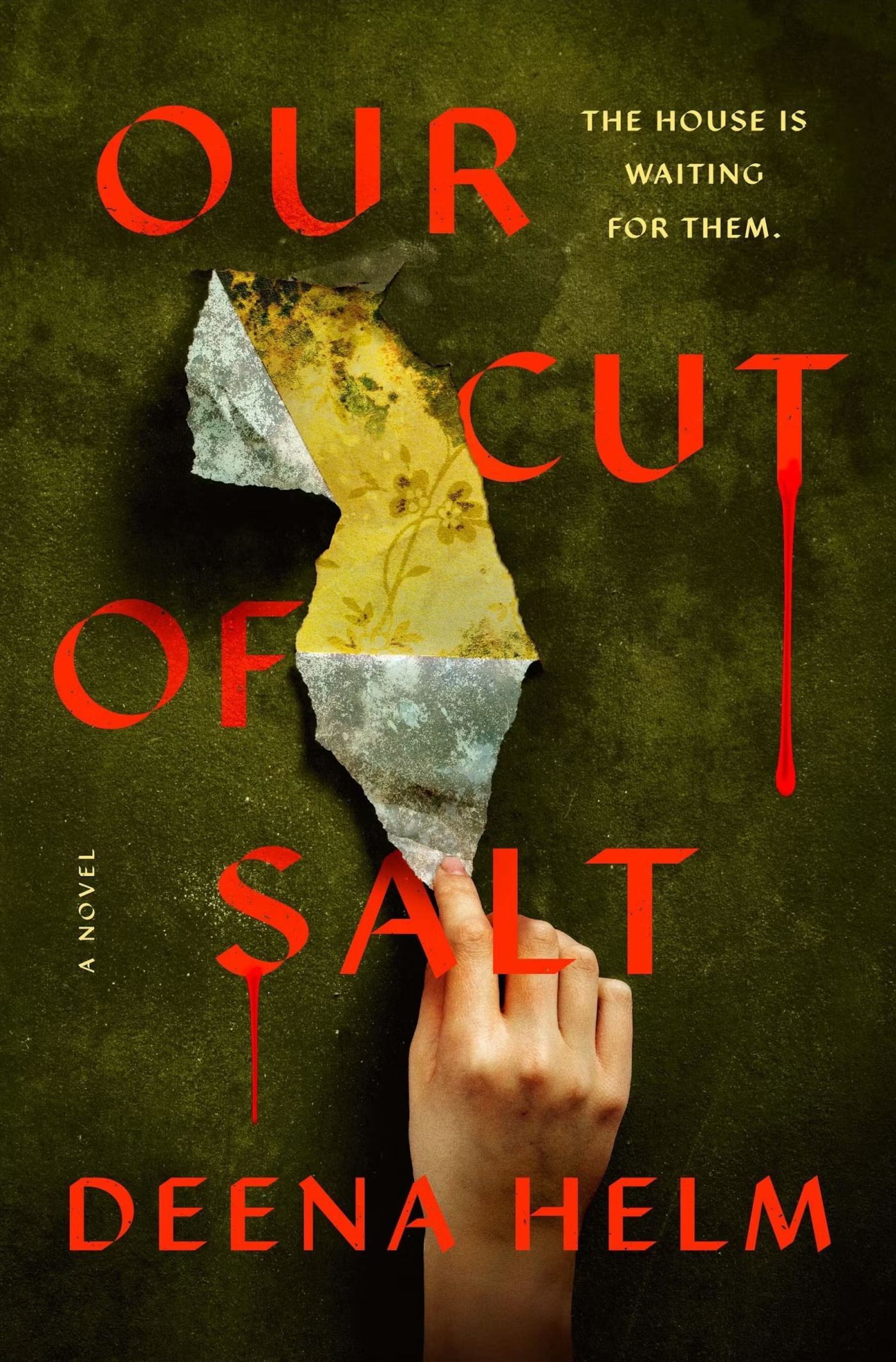
Happy book birthday to Our Cut of Salt by Deena Helm. This has been one of my most anticipated debuts of 2026, and it is as moving as I’d hoped.
In 2002, Marina is preparing to travel to her late grandmother’s childhood home in Haifa, Palestine. Though reluctant at first, her mom, Haifa (named for the city), also makes the journey. There, both women must reckon with all the secrets and traumas Nuhad buried in Palestine in 1948. With the help of Nuhad’s friend Rania, they face the house’s haunting, as painful and harrowing as it proves to be.
What I Liked:
- Palestinian history and ongoing strife. Though this is mainly set in 2002, and so doesn’t dive into the most recent ongoing genocide, Our Cut of Salt does offer a multi-generational view of the horrors Palestinians have faced since 1948. From the violent displacement and needless murders to the ripple effects extending for the next 54 years and beyond, this novel blends history and horror with a family saga. It’s informative but, moreover, filled with emotion and care for the characters. It gives voice to Palestinians still in Palestine and those in the wider diaspora.
- The house as a character. There’s a repeated refrain in the first chapter of “Why is the house in Haifa haunted?” Bit by bit, the answers to that question arise. We also get to see the haunted house become its own thinking, feeling entity, craving its real family to come back within its walls. The house outright rejects anyone else who dares enter, both by haunting and killing intruders. It only wants Nuhad’s family, and won’t rest until past wrongs are righted.
- Three generations of women and how their traumas interconnect. There’s a lot of hardship and intergenerational trauma in Our Cut of Salt. Nuhad and her family (plus her friend Rania) faced the worst of it in 1948, but those effects trickled down to her daughter Haifa, and in turn to her granddaughter Marina. With Nuhad now gone, it’s up to the younger women to reconcile with the secrets and pain buried in the past and to carve a new path forward.
What Didn’t Work for Me:
- It’s a bit saccharine by the end. This haunting novel has a dramatic scene at its climax, and while it’s more hopeful than I expected, I appreciate the way it gives our characters peace. And like the women in this book, I hope Palestinians may see their own freedom restored soon, too.
Audiobook:
Victoria Nassif does a lovely job of narrating Our Cut of Salt. She seamlessly moves between each of the different characters and times, and I enjoyed her pronunciation of Arabic names and words. This is a gentle and engrossing audiobook.
Final Thoughts
Our Cut of Salt is a beautifully written novel that draws a haunting from the very real horrors Palestinians have faced for decades. It’s also a multigenerational work of resilience and reconnection, leaving readers with hope for a better future. This was a powerful debut, and I look forward to reading more from Deena Helm. Free Palestine.
Special thanks to Tor Publishing, Macmillan Audio, and NetGalley for providing me with an ARC of this book!
Get the Book
You can buy Our Cut of Salt here – it’s available as a hardcover, paperback, ebook, and audiobook.
| Our Cut of Salt by Deena Helm | |
|---|---|
| Audiobook Narrator | Victoria Nassif |
| Audience | Adult |
| Genre | Horror; Literary Fiction |
| Setting | Palestine |
| Number of Pages | 288 |
| Format I Read | Audiobook & Ebook (NetGalley ARCs) |
| Original Publication Date | September 22, 2026 |
| Publisher | Tor Nightfire |
Official Summary
In this lyrical debut, three generations of Palestinian women must put the haunting of their ancestral home to rest, before the secrets of the past drown them all. Our Cut of Salt is a powerful and intimate look at what it means to make a home, to lose it, and to return, only to find it irrevocably changed.
“A one-of-a-kind haunted house.” —Paul Tremblay, New York Times bestselling author
There is something haunting Nuhad’s childhood home in Haifa. Cats avoid its perimeter, strange noises come from within, and residents have mysteriously vanished without a trace. Although Nuhad has not returned to her home since the Nakba in 1948, she always held a place for the house in her heart.
And, in return, the house did the same for her.
After Nuhad passes away, her granddaughter, Marina, is determined to visit her grandmother’s home after a lifetime of being kept in the dark about her culture and family history. Marina’s mother, Haifa – named for the city that was lost to their family – reluctantly agrees to her trip, though she knows firsthand that some secrets are better left buried.
But the house is no longer a home. It is a painful, festering wound that infects everything it touches. The more Marina digs into her family’s past, the sicker she becomes. Despite Nuhad’s ghostly warnings, Haifa rushes to help her daughter.
As the three women converge in their ancestral home, they must put the haunting to rest before the secrets of the past drown them all.
About the Author
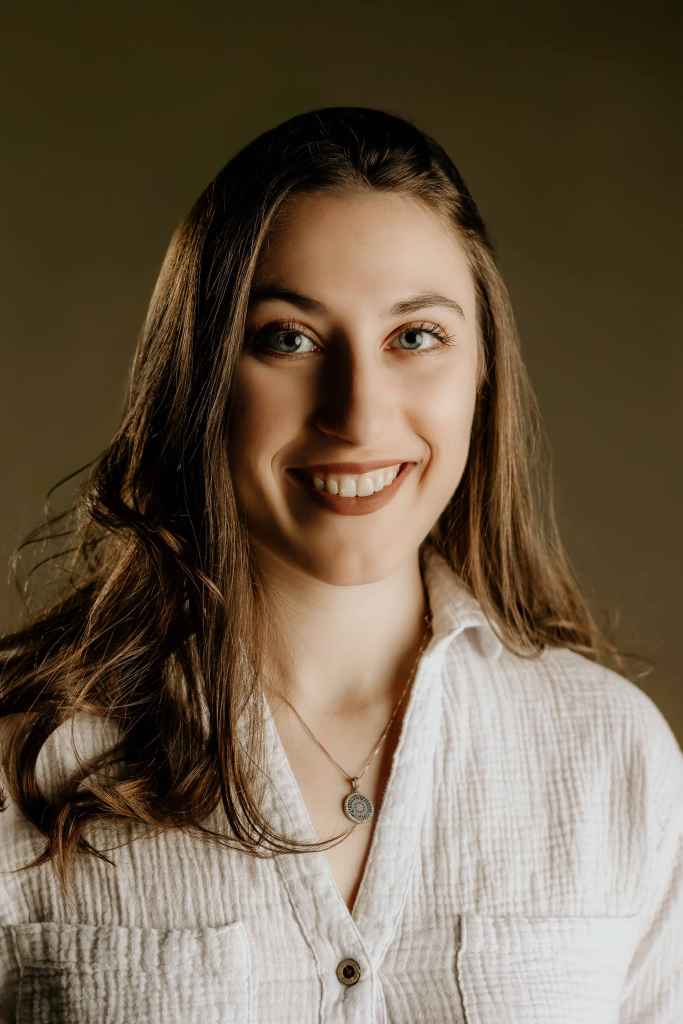
Credit: Richele Renea, Richele Renea Photography
DEENA HELM is a mixed Palestinian-American author, and Our Cut of Salt is her debut novel. Her other works can be found in Fikra Magazine and So To Speak. She asks that you, the reader, do everything in your power to resist genocide and deepen your commitment to liberation for all.
More Reviews of Books Like This

Against the Loveless World
Sometimes a book’s title is enough to capture your attention and make you need to read it. Good covers can work the same magic. In…

The Djinn Waits a Hundred Years
The Djinn Waits a Hundred Years is Shubnum Khan’s first novel available in the United States. This is one of those cases where the cover…

A Woman is No Man
I signed up for Book of the Month in January this year, getting two 2018 books and excitedly awaiting the months of books ahead of…
Similar Books on My TBR
Discover more from Amanda's Book Corner
Subscribe to get the latest posts sent to your email.


Footnotes